Overview
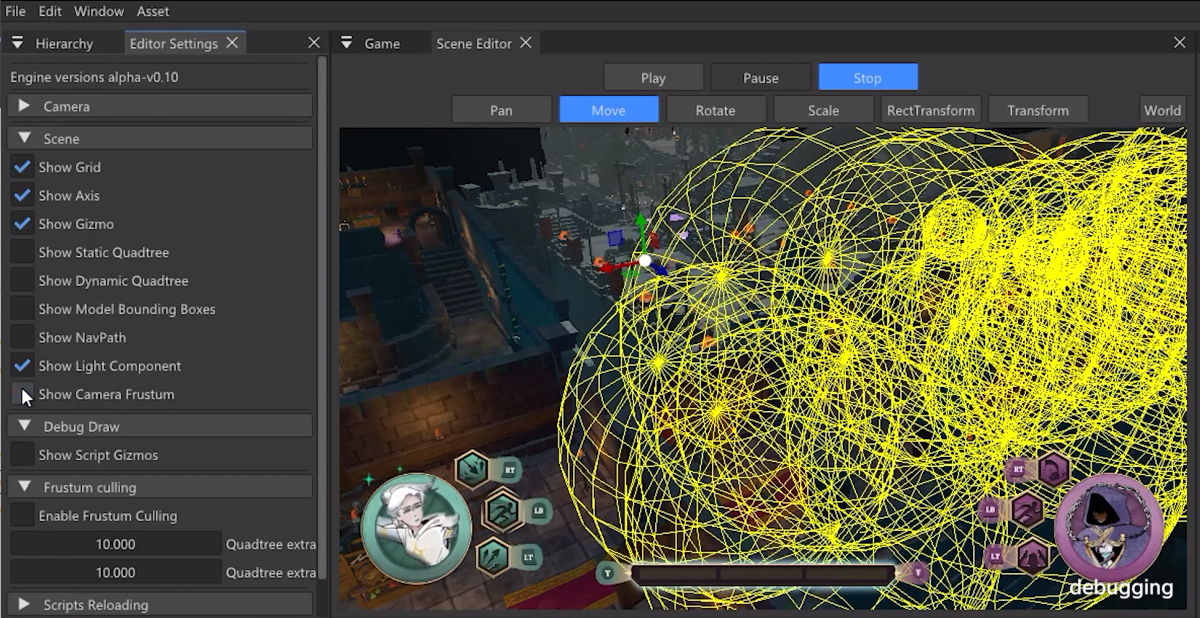
Manages EditorWindow instances via factory map (registerWindowType), persisted layout editor_windows.ini, ImGui styling, selection (GameObject / Asset), scene tools (move/rotate/scale/transform/nav), gizmo local/world, prefab edit sessions, simulation mode enum mirrored by play toolbar.
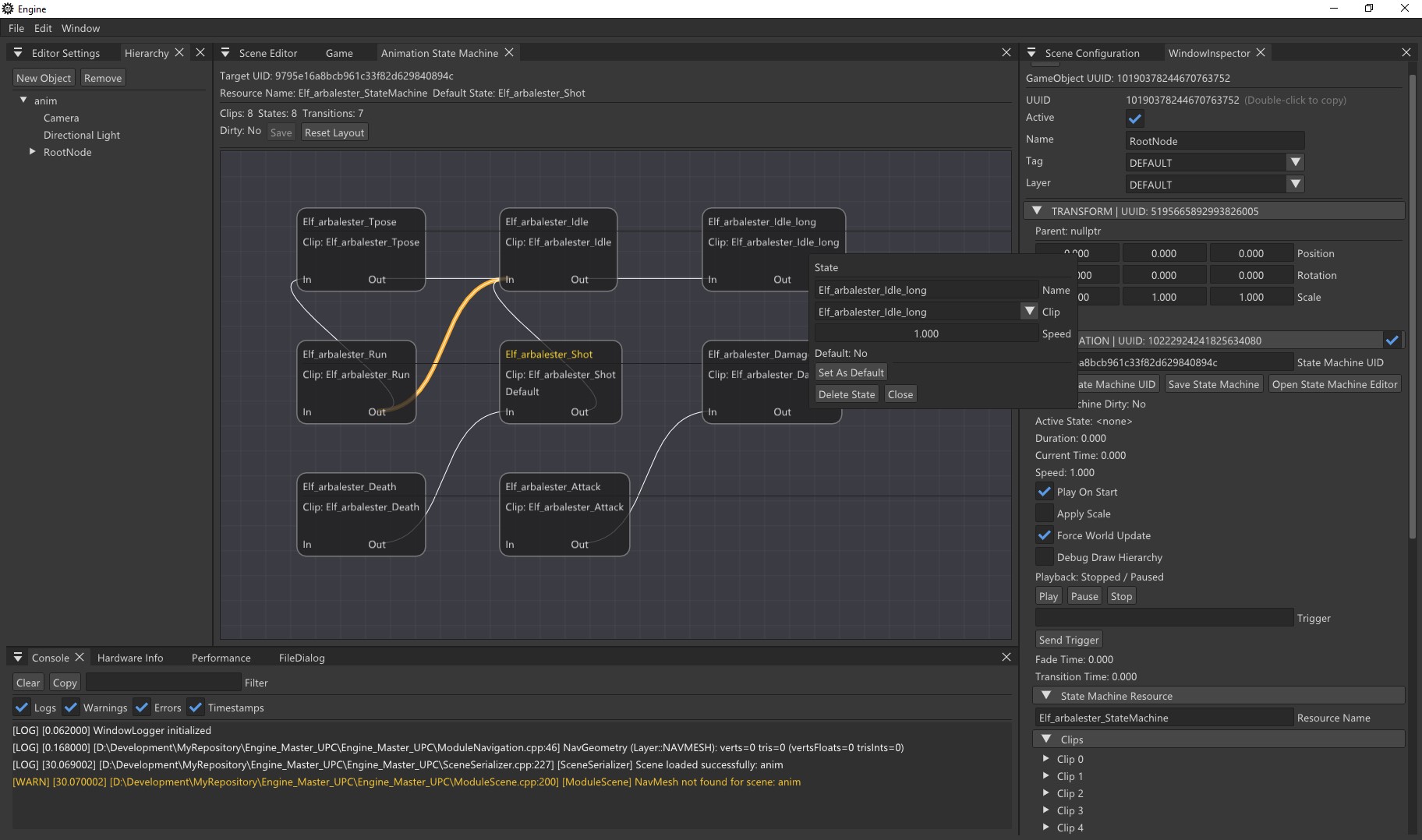
Registered windows include Hierarchy, Inspector, Scene Editor, Game view, Logger, Hardware, Settings, File dialog, Scene config, Animation state machine, Music/Video debug, Data container manager, etc.
render draws editor UI through ImGui (with ModuleEditor::render override).
How it works
- Window types register with the editor factory; instances are created and laid out via ImGui docking.
- Selection, scene tools, and gizmo modes drive manipulation of
ModuleScenecontent. - Play toolbar coordinates simulation mode with
ModuleGameViewandENGINE_STATE. render()draws the full editor UI each frame in non-release builds.
Internal architecture
ModuleEditor
├── EditorWindow registry + instances
├── Selection + scene tools + gizmo flags
├── PrefabEditSession
├── WindowSceneEditor / WindowGame references
└── ImGui integration (style, dock layout)
Relationships
- Drives
ModuleCamera, talks toModuleScene/ModuleAssets, registers debug drawables, coordinates withModuleGameViewfor play/stop.
Technical features
- ImGui docked editor with persisted
editor_windows.inilayout. - Broad window ecosystem (hierarchy, inspector, scene/game views, debug tools).
- Prefab edit sessions and scene manipulation tools.
Implementation notes
- Verified: broad editor window ecosystem;
#ifndef GAME_RELEASEfor much asset UI elsewhere, editor module itself always present in non-release builds.